Astor AcademyGov
menu
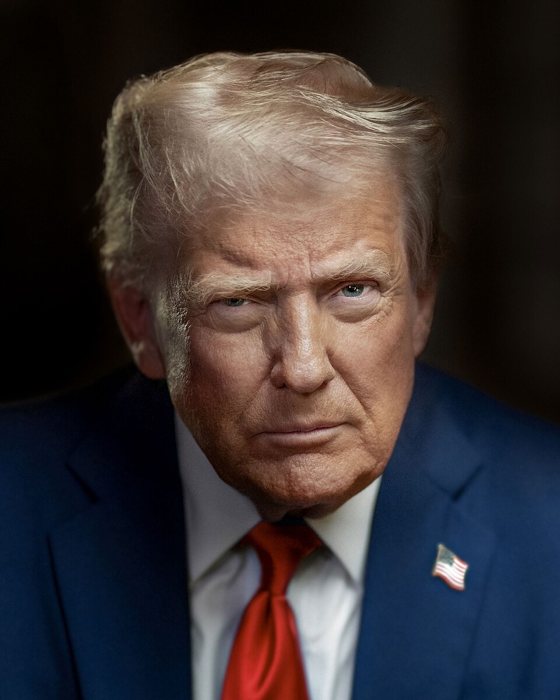
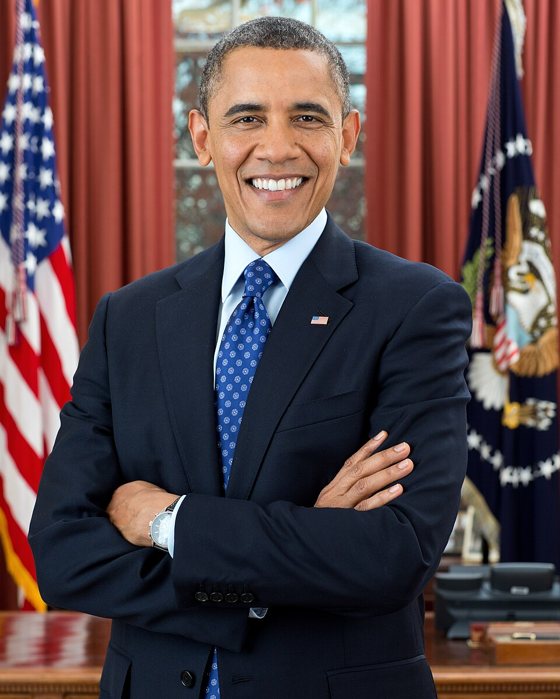
Official portrait of Donald Trump
official portrait · Daniel Torok, The White House, 2025 · public domain · source

// 45th and 47th president · Republican · 2017–2021, 2025–

Donald TrumpThe 45th and 47th president

A New York real estate developer and reality-television star who won the presidency in 2016 in his first run for any office, lost in 2020, refused to accept that loss, and won again in 2024. He is the second president to serve non-consecutive terms, after Grover Cleveland, the only president impeached twice, and the first former president convicted of a crime.

who
Donald John Trump, born June 14, 1946, in Queens, New York City.
party
Republican
in office
Jan 20, 2017 – Jan 20, 2021 (45th); Jan 20, 2025 – present (47th)
vice presidents
Mike Pence (first term); JD Vance (second term)
before
Head of the Trump Organization; host of NBC's The Apprentice (2004–15); no prior public office
elections
Won 2016 (304 electoral votes, lost the popular vote); lost 2020 (232); won 2024 (312, won the popular vote)
known for
Tariffs and trade wars, the 2017 tax law, three Supreme Court justices, immigration crackdowns, two impeachments, the Jan 6 Capitol attack, criminal and civil cases, sweeping use of executive power
status
Serving his second term (as of this review). Term ends Jan 20, 2029.
five presidencies, 1993 to the end of the current term (Jan 2029)
1993199720012005200920132017202120252029

blue = Democrat · red = Republican · Trump's two terms are split by Biden's term

electoral votes (538 total, 270 to win; line marks 270)
2016

Trump 304 · H. Clinton 227 · others (faithless electors) 7 · Clinton won the popular vote by about 2.9 million

2020

Biden 306 · Trump 232 · lost; Biden won the popular vote by about 7 million

2024

Trump 312 · Harris 226 · Trump won the popular vote by about 1.5 percentage points

timeline
  1. 1946Born in Queens
  2. 1968Graduates from the Wharton School; joins his father's real estate firm
  3. 1983Trump Tower opens in Manhattan
  4. 1991–2004Several Trump casino and hotel companies go through bankruptcy
  5. 2004The Apprentice debuts on NBC
  6. 2015Announces presidential campaign
  7. 2016Defeats Hillary Clinton
  8. 2017Travel ban; Mueller investigation opens; Tax Cuts and Jobs Act
  9. 2018Tariffs on steel, aluminum and Chinese goods; leaves Iran nuclear deal; First Step Act
  10. 2019Mueller report; first impeachment (Ukraine)
  11. 2020Acquitted; COVID-19 pandemic; CARES Act; loses to Joe Biden
  12. 2021Jan 6 Capitol attack; second impeachment; acquitted
  13. 2023Indicted in four criminal cases
  14. 2024Convicted on 34 counts in New York (May); Supreme Court immunity ruling (July); survives assassination attempt (July); wins presidency (November)
  15. 2025Second inauguration; mass pardons of Jan 6 defendants; sweeping tariffs; One Big Beautiful Bill Act
  16. 2026Supreme Court strikes down his emergency tariffs (Feb) and his birthright citizenship order (June)
§ 1

Early life and business career

Trump grew up in Queens, the son of Fred Trump, a developer of middle-class housing. After military school and the Wharton School at the University of Pennsylvania, he joined his father's business and moved it into Manhattan luxury real estate.

He built Trump Tower, bought hotels and Atlantic City casinos, and turned his name into a brand. Several of his casino and hotel companies filed for bankruptcy between 1991 and 2009. From 2004 he hosted NBC's The Apprentice, which made him a national celebrity.

more details

He received student and medical deferments from the Vietnam draft, the medical one for bone spurs.

In 1973 the Justice Department sued Trump's company for discrimination against Black renters; it settled without admitting guilt. A 2018 New York Times investigation, based on tax records, reported that he received hundreds of millions of dollars from his father's business over his life, much of it through tactics the Times described as dubious; Trump called the story false.

He considered running for president several times, briefly sought the Reform Party nomination in 2000, and from 2011 promoted the false claim that Barack Obama was not born in the U.S., which he acknowledged was untrue in 2016.

sources [1] [2]

§ 2

Elections: 2016, 2020 and 2024

In 2016 Trump beat 16 Republican rivals and then Hillary Clinton, winning 304 electoral votes by narrowly carrying Pennsylvania, Michigan and Wisconsin while losing the national popular vote.

In 2020 he lost to Joe Biden, 306 to 232, and refused to concede. In 2024 he beat Vice President Kamala Harris, winning every swing state and the popular vote.

more details

His 2016 campaign promised to build a wall on the Mexican border, renegotiate trade deals and "drain the swamp." A 2005 Access Hollywood recording in which he boasted about grabbing women surfaced a month before the election. U.S. intelligence agencies and the Mueller investigation found that Russia interfered in 2016 to help Trump, through social media operations and hacked Democratic emails.

After 2020 he claimed widespread fraud. His campaign and allies lost more than 60 lawsuits, and his attorney general, William Barr, said the Justice Department had found no fraud on a scale that could have changed the outcome. Trump pressed Georgia's secretary of state to "find" votes and urged Vice President Pence to reject electoral votes.

In 2024 he became the first major-party nominee to stand trial in a criminal case. He survived an assassination attempt at a rally in Butler, Pennsylvania, on July 13, 2024, and a second apparent plot in Florida that September. He won 312 electoral votes.

sources [3] [4] [5] [6] [7]

§ 3

First term: laws, judges and executive action

The Tax Cuts and Jobs Act of 2017 cut the corporate tax rate from 35% to 21% and lowered individual rates through 2025. The First Step Act of 2018, a bipartisan law, eased some federal sentences.

Trump appointed three Supreme Court justices (Neil Gorsuch, Brett Kavanaugh and Amy Coney Barrett) and more than 200 federal judges, shifting the courts to the right. The Court went on to overturn Roe v. Wade in 2022.

more details

An effort to repeal the Affordable Care Act failed in the Senate in July 2017 by one vote, when John McCain voted no. The tax law did eliminate the individual mandate penalty.

Within days of taking office he signed an order barring travel from several majority-Muslim countries; after revisions, the Supreme Court upheld a version in Trump v. Hawaii (2018). His administration's "zero tolerance" policy in 2018 separated thousands of migrant children from their parents at the border before he ended it under public pressure; a Justice Department inspector general later faulted its planning.

He also rolled back many environmental and financial regulations, withdrew from the Paris climate agreement and the Iran nuclear deal, and reduced refugee admissions to the lowest levels in decades.

sources [8] [9] [10] [11]

§ 4

Trade and the economy (first term)

Trump imposed tariffs on steel, aluminum and hundreds of billions of dollars of Chinese goods, starting a trade war with China that ended in a partial "Phase One" deal in January 2020. He replaced NAFTA with the U.S.-Mexico-Canada Agreement.

Before the pandemic, unemployment fell to 3.5%, a 50-year low. The COVID-19 recession then pushed it to 14.8% in April 2020, according to the Bureau of Labor Statistics.

more details

Economists, including at the Federal Reserve and the nonpartisan Congressional Budget Office, found that the costs of the tariffs fell largely on U.S. importers and consumers. China retaliated against U.S. farm exports, and the administration paid farmers billions in aid.

The economy grew steadily in 2017–2019, continuing the expansion that began in 2009. Federal deficits rose even before the pandemic, partly because of the tax law, and then reached record levels in 2020.

sources [12] [13] [14]

§ 5

The COVID-19 pandemic

The pandemic dominated Trump's last year. He signed the $2.2 trillion CARES Act in March 2020, with direct payments, expanded unemployment benefits and forgivable small-business loans. Operation Warp Speed helped speed vaccine development; the first vaccines were authorized in December 2020.

Critics fault his handling: he played down the virus early, clashed with health officials and governors, and promoted unproven treatments.

more details

He told journalist Bob Woodward in March 2020 that he "wanted to always play it down." He suggested at a briefing that injecting disinfectant might be studied, comments the White House later said were sarcastic. He was hospitalized with COVID-19 in October 2020.

More than 400,000 Americans had died of COVID-19 by the time he left office, according to the CDC. Supporters credit Operation Warp Speed and the CARES Act with saving lives and livelihoods.

sources [15] [16]

§ 6

Foreign policy (first term)

Trump pursued an "America First" approach: he pressed NATO allies to spend more, met North Korea's Kim Jong Un three times, moved the U.S. embassy in Israel to Jerusalem, and brokered the Abraham Accords normalizing relations between Israel and several Arab states.

He ordered the January 2020 strike that killed Iranian general Qassem Soleimani, and signed a deal with the Taliban to withdraw U.S. troops from Afghanistan.

more details

The North Korea summits did not produce an agreement to dismantle Pyongyang's nuclear program. His relationship with Russian President Vladimir Putin, including a 2018 Helsinki news conference where he appeared to accept Putin's denial of election interference, drew bipartisan criticism.

The Abraham Accords (2020) established ties between Israel and the United Arab Emirates and Bahrain, later joined by Morocco and Sudan.

sources [1] [17]

§ 7

Two impeachments

The House impeached Trump in December 2019 for abuse of power and obstruction of Congress over his pressure on Ukraine to investigate Joe Biden while military aid was withheld. The Senate acquitted him in February 2020.

The House impeached him again on Jan 13, 2021, for incitement of insurrection after the Capitol attack. The Senate acquitted him in February 2021, 57–43, short of the two-thirds needed; seven Republicans voted to convict.

more details

The first case centered on a July 2019 phone call in which Trump asked Ukraine's president to "do us a favor" and look into the Bidens. A whistleblower complaint led to House hearings. In the Senate trial, Mitt Romney was the only Republican to vote to convict, on the abuse of power article.

The Mueller investigation (2017–2019) found that Russia interfered in 2016 and that the campaign had numerous contacts with Russia, but did not establish a criminal conspiracy. It described ten episodes of possible obstruction and declined to decide whether Trump committed a crime, while stating that the report "does not exonerate him." Attorney General Barr concluded the evidence did not support an obstruction charge.

sources [18] [6]

§ 8

January 6, 2021

On Jan 6, 2021, after Trump told a rally near the White House to "fight like hell" and march to the Capitol, a crowd of his supporters stormed the building, interrupting the count of electoral votes. Lawmakers fled; about 140 police officers were injured, and several people died during or after the attack.

More than 1,500 people were charged. On his first day back in office in 2025, Trump pardoned or commuted the sentences of nearly all of them.

more details

The House select committee concluded in December 2022 that Trump was the central cause of the attack and recommended criminal charges. Republicans criticized the committee as partisan, since most members were chosen by Democratic leadership after a dispute over appointments.

Trump said he had urged supporters to protest "peacefully and patriotically" and called the defendants political prisoners and "hostages." Polls show Americans remain deeply divided on how to describe that day.

sources [7] [19]

§ 9

The criminal and civil cases

In 2023 Trump was indicted in four criminal cases. A Manhattan jury convicted him in May 2024 on 34 felony counts of falsifying business records related to a hush-money payment; in January 2025 he was sentenced to an unconditional discharge, with no jail or fine. He is appealing.

The two federal cases (over the 2020 election and classified documents) were dropped after he won in 2024, following Justice Department policy against prosecuting a sitting president. The Georgia election case was dismissed in November 2025 after the prosecutor who took it over dropped the charges.

more details

In Trump v. United States (July 2024), the Supreme Court ruled 6–3 that former presidents have absolute immunity for core constitutional acts and presumptive immunity for other official acts, which delayed and narrowed the federal election case. The classified documents case had already been dismissed by a federal judge in Florida on the ground that the special counsel was improperly appointed.

In civil cases, a jury found him liable in 2023 for sexually abusing and defaming the writer E. Jean Carroll, and a second jury awarded her $83.3 million for defamation in 2024; both verdicts were upheld on appeal. A New York judge found in 2024 that he and his company had fraudulently inflated asset values; an appeals court in 2025 upheld the fraud finding but threw out the roughly half-billion-dollar penalty.

Trump and his supporters describe the cases as politically motivated "lawfare" by Democratic prosecutors. Prosecutors and many legal scholars say the cases were brought on the evidence.

sources [20] [21] [22] [32]

§ 10

Second term (2025– ): executive power, tariffs and courts

Trump began his second term with dozens of executive orders on immigration, federal employment, energy and "diversity, equity and inclusion" programs. A team called the Department of Government Efficiency, led at first by Elon Musk, cut federal grants, contracts and staff, and dismantled agencies such as USAID.

In April 2025 he announced broad "reciprocal" tariffs on nearly all U.S. trading partners under an emergency-powers law. On Feb 20, 2026, the Supreme Court ruled 6–3 that the law does not authorize tariffs, striking those duties down.

more details

The One Big Beautiful Bill Act, signed on July 4, 2025, extended the 2017 tax cuts, added new breaks (including on tips and overtime), cut projected Medicaid and food assistance spending, and increased funding for immigration enforcement and the military. CBO estimated it would add about $3.4 trillion to federal deficits over 2025–2034; the administration argued growth and tariffs would offset the cost.

His administration expanded immigration arrests and deportations, used the 1798 Alien Enemies Act to deport Venezuelans (which courts limited), and sent National Guard troops into several cities over governors' objections. On Jan 20, 2025, he signed an order denying birthright citizenship to children of parents who are unlawfully or temporarily in the country; the Supreme Court held it unconstitutional, 6–3, in Trump v. Barbara on June 30, 2026.

In June 2025 the U.S. struck Iranian nuclear sites. Later military actions involving Iran in 2026 and the results of the Nov 3, 2026 midterm elections are being added to this page after source review; this section covers events through the June 2026 court ruling in detail.

sources [23] [24] [25] [26] [27]

§ 11

Criticisms, in full

Each criticism below sets out the claim, the evidence, why critics care, and the reply from Trump or his defenders. The list covers the most cited criticisms across both terms; it is not exhaustive.

Trying to overturn the 2020 election

the claim Critics say Trump tried to overturn a lawful election, culminating in the Jan 6 attack on the Capitol.

evidence, why it matters, the reply

evidence

More than 60 lawsuits failed. Trump's own attorney general said the Justice Department found no outcome-changing fraud. Recorded calls show Trump asking Georgia's secretary of state to "find 11,780 votes." Pence said Trump asked him to reject electoral votes, which Pence said he had no authority to do. The House January 6 committee and a federal grand jury (in a case later dropped) described a multi-part effort including slates of false electors.

why critics care

Critics argue that the peaceful transfer of power is the foundation of American democracy, and that a president using his office to stay in power after losing is among the most serious abuses possible.

the other side

Trump maintains the 2020 election was rigged and that he was exercising his right to challenge results. Supporters say the Jan 6 committee was one-sided, that Trump called for peaceful protest, and that voters weighed the issue and re-elected him in 2024. The Supreme Court's immunity ruling held that much of his official conduct could not be prosecuted.
sources [7] [22] [20]

Conflicts of interest and personal enrichment

the claim Critics say Trump has used the presidency to enrich himself and his family.

evidence, why it matters, the reply

evidence

Trump kept ownership of his businesses in both terms. In his first term, foreign governments and lobbyists spent money at his hotels, prompting lawsuits under the Constitution's emoluments clauses that ended without a final ruling when he left office. Days before his 2025 inauguration he launched a $TRUMP cryptocurrency "meme coin," and his family is involved in the crypto company World Liberty Financial; Qatar's offer of a luxury jet for presidential use in 2025 drew bipartisan criticism.

why critics care

Critics argue that when people seeking favors can pay a president's businesses, the public cannot know whose interests decisions serve.

the other side

Trump says he has lost money by serving, donated his presidential salary, and that his businesses are run by his sons. The White House has said his assets are in a trust managed by his children and that there are no conflicts; it said the jet would belong to the government.

sources [28]

Family separations and immigration enforcement

the claim Critics say his immigration policies have been cruel and, at times, unlawful.

evidence, why it matters, the reply

evidence

In 2018 the zero-tolerance policy separated thousands of children from parents; the Justice Department inspector general found officials knew separations would result and planned poorly to reunite families. In 2025 courts ruled against several deportation actions, including removals under the Alien Enemies Act without adequate notice, and the Supreme Court ordered the government to facilitate the return of a man it acknowledged was deported to El Salvador in error.

why critics care

Critics argue due process protects everyone in the U.S., and that harsh tactics harm children and U.S. citizens caught up in enforcement.

the other side

Trump says he is enforcing laws previous administrations ignored, after a border crisis under Biden, and points to sharply lower border crossings in 2025. Supporters say judges are overstepping their role on immigration and national security.

sources [11]

Tariffs and the economy

the claim Critics say his tariffs raised prices for Americans, hurt farmers and businesses, and exceeded his legal power.

evidence, why it matters, the reply

evidence

Studies by the Federal Reserve, CBO and academic economists found first-term tariff costs fell mostly on U.S. buyers. In 2025 the administration imposed the broadest tariffs in decades by executive action; the Supreme Court ruled in February 2026 that the emergency law he used did not authorize them.

why critics care

Tariffs are taxes paid at the border; critics argue they function as a tax increase on consumers imposed without Congress, and that uncertainty hurts investment.

the other side

Trump argues tariffs protect American manufacturing and jobs, raise revenue, and give the U.S. leverage to win better trade deals, several of which his administration announced in 2025. He has said he would use other legal authorities to keep tariffs in place.

sources [13] [24]

Pressure on institutions and the rule of law

the claim Critics say Trump has used government power against opponents and weakened checks on the presidency.

evidence, why it matters, the reply

evidence

In his second term he fired inspectors general and independent agency officials, ordered security clearances revoked for critics, signed orders targeting law firms linked to his opponents (several were struck down in court), and publicly urged prosecutions of political adversaries. His pardons of Jan 6 defendants included people convicted of assaulting police officers.

why critics care

Critics argue a Justice Department used for personal or political ends threatens equal treatment under law for all citizens.

the other side

Trump and his allies say he is correcting a "weaponized" government that targeted him, that the Constitution gives the president control of the executive branch, and that he won a mandate to remake Washington. The Supreme Court has backed broad presidential removal power in several rulings.

sources [20]

§ 12

Money: PACs, super PACs, philanthropy

Trump's political money runs through his campaign committees, a leadership PAC that paid many of his legal bills, allied super PACs, and, separately, a family foundation that was dissolved under court supervision.

Campaign committees and PACs

Donald J. Trump for President and joint fundraising committees with the Republican National Committee raised hundreds of millions of dollars each cycle, much of it from small online donors. After 2020 his leadership PAC, Save America, raised large sums on claims of election fraud.

more details

FEC filings show Save America spent tens of millions of dollars on lawyers representing Trump and his associates in 2022–2024. The House January 6 committee said fundraising appeals about fighting fraud raised money that largely went elsewhere, which it called "the Big Rip-off"; Trump's team called that misleading.

In 2016 he largely self-funded his primary campaign through loans and contributions before raising money from donors in the general election. His 2025 inaugural committee raised record sums, according to its FEC report.

sources [29] [7]

Super PACs and outside groups

MAGA Inc. is the main super PAC supporting Trump; it spent heavily in 2024 and kept raising money after the election. Elon Musk's America PAC spent large sums supporting him in 2024.

more details

Super PACs may raise unlimited sums from individuals and corporations but may not coordinate spending with campaigns, under FEC rules. Donors and spending are reported to the FEC.

sources [30] [31]

Philanthropy and foundations

The Donald J. Trump Foundation was dissolved in 2018 after New York's attorney general sued, alleging it was used for Trump's political and business interests. In 2019 a judge ordered Trump to pay $2 million to other charities.

more details

The lawsuit said foundation money was used to settle business disputes, buy a portrait of Trump, and stage a 2016 campaign event for veterans. Trump agreed to admit to some misuse as part of the settlement; his children were required to take charity governance training. Trump called the case politically motivated.

He has said he donates his presidential salary to government agencies. The Trump Presidential Library is planned in Miami.

sources [33]

See also the tracker's PACs and Philanthropy pages (New York first).

§ 13

Sources

Every section above is an original summary written for Astor Academy from the public sources below. Numbers come from official records (National Archives, FEC, BLS, CBO, court opinions, Congress) wherever possible. Last reviewed Nov 9, 2026.

  1. [1] Donald Trump: presidential essays · Miller Center, University of Virginia
  2. [2] President Donald J. Trump · The White House
  3. [3] 2016 Electoral College results · National Archives
  4. [4] 2020 Electoral College results · National Archives
  5. [5] 2024 Electoral College results · National Archives
  6. [6] Report on the Investigation into Russian Interference in the 2016 Presidential Election (Mueller report) · U.S. Department of Justice
  7. [7] Final Report of the Select Committee to Investigate the January 6th Attack (H. Rept. 117-663) · GovInfo
  8. [8] H.R.1 (115th): Tax Cuts and Jobs Act · Congress.gov
  9. [9] S.756 (115th): First Step Act of 2018 · Congress.gov
  10. [10] Trump v. Hawaii, 585 U.S. 667 (2018) · U.S. Supreme Court (via Cornell LII)
  11. [11] Review of the Department of Justice's Planning and Implementation of Its Zero Tolerance Policy (2021) · DOJ Office of the Inspector General
  12. [12] Unemployment rate (series LNS14000000) · U.S. Bureau of Labor Statistics
  13. [13] The Budgetary and Economic Effects of tariffs (CBO analyses) · Congressional Budget Office
  14. [14] H.R.5430 (116th): United States-Mexico-Canada Agreement Implementation Act · Congress.gov
  15. [15] H.R.748 (116th): CARES Act · Congress.gov
  16. [16] Provisional COVID-19 death counts (NVSS) · CDC National Center for Health Statistics
  17. [17] The Abraham Accords · U.S. Department of State
  18. [18] Impeachment trials of President Donald J. Trump (2020, 2021) · U.S. Senate
  19. [19] Capitol breach cases · U.S. Department of Justice
  20. [20] Trump v. United States, 603 U.S. 593 (2024) · U.S. Supreme Court
  21. [21] Attorney General James's case against Donald Trump and the Trump Organization · New York State Attorney General
  22. [22] Special Counsel Jack Smith reports (election case and documents case) · U.S. Department of Justice
  23. [23] Executive orders signed by President Trump, 2025 · Federal Register
  24. [24] Learning Resources, Inc. v. Trump, No. 24-1287 (Feb 20, 2026) · U.S. Supreme Court
  25. [25] H.R.1 (119th): One Big Beautiful Bill Act · Congress.gov
  26. [26] Estimated budgetary effects of Public Law 119-21 · Congressional Budget Office
  27. [27] Trump v. Barbara, No. 25-365 (June 30, 2026) · U.S. Supreme Court
  28. [28] Public financial disclosure reports (OGE Form 278e) · U.S. Office of Government Ethics
  29. [29] Candidate filings: Donald J. Trump (P80001571) · Federal Election Commission
  30. [30] Making independent expenditures (super PACs) · Federal Election Commission
  31. [31] Independent expenditures data · Federal Election Commission
  32. [32] Georgia election case against Trump dismissed (Nov 26, 2025) · Associated Press
  33. [33] AG James secures court order against Donald J. Trump, Trump children, and Trump Foundation (Nov 2019) · New York State Attorney General

other presidents