Astor AcademyGov
menu
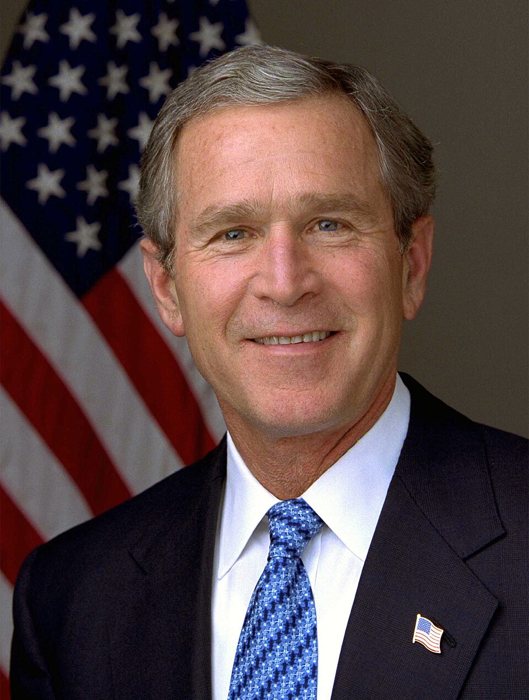
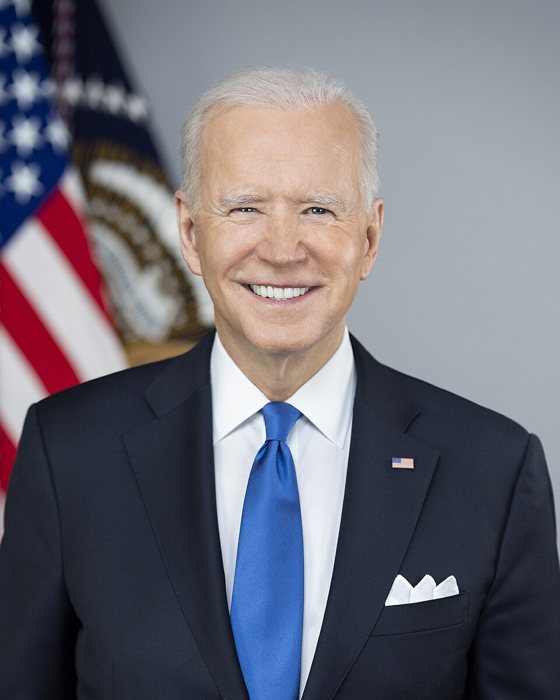
Official portrait of George W. Bush
official portrait · Eric Draper, The White House, 2003 · public domain · source

// 43rd president · Republican · 2001–2009

George W. BushThe 43rd president

The two-term governor of Texas and son of the 41st president won the closest election in modern history, decided by the Supreme Court. Eight months later the September 11 attacks reshaped his presidency around wars in Afghanistan and Iraq. He left office in the middle of the worst financial crisis since the Great Depression.

who
George Walker Bush, born July 6, 1946, in New Haven, Connecticut; raised in Midland and Houston, Texas. Not to be confused with his father, George H.W. Bush (41st president, 1989–93).
party
Republican
in office
Jan 20, 2001 – Jan 20, 2009 (two terms)
vice president
Dick Cheney
before
Oil business; part-owner of the Texas Rangers baseball team; governor of Texas (1995–2000)
elections
Won 2000 (271 electoral votes, lost the popular vote) and 2004 (286, won the popular vote)
known for
9/11 and the "war on terror," the Afghanistan and Iraq wars, tax cuts, No Child Left Behind, Medicare drug coverage, PEPFAR, Hurricane Katrina, the 2008 bank rescue
after office
George W. Bush Presidential Center in Dallas; painting; largely stayed out of partisan politics
five presidencies, 1993 to the end of the current term (Jan 2029)
1993199720012005200920132017202120252029

blue = Democrat · red = Republican · Trump's two terms are split by Biden's term

electoral votes (538 total, 270 to win; line marks 270)
2000

Bush 271 · Gore 266 · one D.C. elector abstained; Gore won the popular vote by about 540,000

2004

Bush 286 · Kerry 251 · one Minnesota elector voted for John Edwards

timeline
  1. 1946Born in New Haven, Connecticut
  2. 1968Yale graduate; joins the Texas Air National Guard
  3. 1975Harvard MBA; enters the oil business in Midland
  4. 1994Elected governor of Texas; re-elected 1998
  5. 2000Wins the presidency after the Florida recount and Bush v. Gore
  6. 2001Tax cut law; Sept 11 attacks; war in Afghanistan begins; Patriot Act
  7. 2002No Child Left Behind; Department of Homeland Security; Iraq war authorization
  8. 2003Invasion of Iraq (March); PEPFAR; Medicare Part D; second tax cut
  9. 2004Abu Ghraib abuse photos; re-elected over John Kerry
  10. 2005Hurricane Katrina; Social Security plan stalls
  11. 2006Democrats win Congress
  12. 2007Iraq troop "surge"
  13. 2008Financial crisis; TARP bank rescue
§ 1

Early life and the road to the White House

Bush grew up in West Texas, where his father worked in oil, and followed his father to Phillips Academy and Yale. He served as a pilot in the Texas Air National Guard, then earned an MBA from Harvard.

After years in the oil business and as managing partner of the Texas Rangers, he was elected governor of Texas in 1994, defeating Ann Richards, and won re-election in 1998 by a wide margin.

more details

He lost a 1978 race for Congress. He has said he stopped drinking in 1986 and credits a renewed Christian faith with changing his life.

As governor he worked with the Democratic lieutenant governor, Bob Bullock, on education accountability, tort reform and tax cuts. Texas carried out a large number of executions during his tenure, which drew criticism from opponents of the death penalty.

In 2000 he ran on "compassionate conservatism," promising tax cuts, school testing, faith-based social services and a "humble" foreign policy. He beat Senator John McCain in a bruising primary.

sources [1] [2]

§ 2

Elections: the 2000 recount and 2004

The 2000 election came down to Florida, where Bush led Vice President Al Gore by a few hundred votes after a machine recount. After weeks of legal fights, the Supreme Court stopped the recount on Dec 12 in Bush v. Gore, and Bush won with 271 electoral votes while losing the national popular vote.

In 2004 he defeated Senator John Kerry with 286 electoral votes and about 50.7% of the popular vote, the first popular-vote majority since 1988.

more details

Florida's certified margin was 537 votes out of nearly six million. Disputes over punch-card ballots ("hanging chads"), the confusing "butterfly ballot" in Palm Beach County and purges of the voter rolls became national stories.

The Supreme Court ruled 7–2 that the Florida Supreme Court's recount order raised equal-protection problems, and 5–4 that no constitutionally valid recount could be finished by the deadline. Later reviews by news organizations found that the outcome would have depended on which ballots were counted and how.

The 2004 race turned on national security and the Iraq war. A group called Swift Boat Veterans for Truth attacked Kerry's Vietnam record; Kerry and many veterans disputed their claims. Ohio decided the race.

sources [3] [4] [5]

§ 3

September 11 and the war in Afghanistan

On Sept 11, 2001, al-Qaeda hijackers crashed planes into the World Trade Center and the Pentagon, and a fourth plane crashed in Pennsylvania. Nearly 3,000 people were killed.

Within weeks, U.S. and allied forces, working with Afghan opposition groups, toppled the Taliban government that had sheltered al-Qaeda. Osama bin Laden escaped, and the war continued for nearly 20 years.

more details

Congress passed the Authorization for Use of Military Force on Sept 14, 2001, with one dissenting vote in the House. Presidents of both parties have since cited it to justify operations against terrorist groups in many countries.

The 9/11 Commission found that the government had missed chances to detect the plot, citing failures of information sharing between the CIA and FBI, and that the threat had been underestimated under both Clinton and Bush.

Bush's approval rating reached 90% in Gallup polling in late September 2001, the highest ever recorded by Gallup for any president.

The war in Afghanistan lost resources and attention after 2003 as the U.S. turned to Iraq. The Taliban regrouped in Pakistan's border areas and mounted a growing insurgency.

sources [6] [7] [8]

§ 4

Homeland security, surveillance and interrogation

The USA PATRIOT Act of 2001 widened government surveillance powers, and the 2002 Homeland Security Act created the Department of Homeland Security, the largest government reorganization since the 1940s.

The administration also authorized warrantless wiretapping, detention without trial at Guantánamo Bay, and "enhanced interrogation" techniques, including waterboarding, that critics and later investigations called torture.

more details

The National Security Agency's warrantless surveillance program, revealed by The New York Times in 2005, intercepted communications without court orders. Congress later gave it a legal basis in the FISA Amendments Act of 2008.

The Supreme Court ruled against the administration on detainees several times, including in Hamdan v. Rumsfeld (2006) and Boumediene v. Bush (2008), which held that Guantánamo detainees could challenge their detention in federal court.

Photographs of abuse by U.S. soldiers at Abu Ghraib prison in Iraq became public in 2004. A 2014 Senate Intelligence Committee study concluded that the CIA's interrogation methods were brutal and did not produce unique intelligence; the CIA disputed parts of that conclusion.

sources [9] [10] [11]

§ 5

The Iraq war

In March 2003 the U.S. led an invasion of Iraq, arguing that Saddam Hussein's government had weapons of mass destruction and ties to terrorism. Baghdad fell within weeks.

No stockpiles of weapons of mass destruction were found. An insurgency and sectarian civil war followed. Nearly 4,500 U.S. troops died in the Iraq war, and estimates of Iraqi deaths run into the hundreds of thousands.

more details

Congress authorized force in October 2002, with majorities in both parties in the Senate. Secretary of State Colin Powell presented the case to the U.N. Security Council in February 2003; he later called the presentation a "blot" on his record.

The Iraq Survey Group's 2004 report (the Duelfer report) concluded Iraq had ended its stockpiles years earlier, though it found Saddam intended to restart programs once sanctions ended. The Senate Intelligence Committee found that prewar intelligence assessments were overstated and not supported by the underlying evidence.

Decisions after the invasion, including disbanding the Iraqi army and barring former Baath Party members from public jobs, are widely blamed for fueling the insurgency. In 2007 Bush sent about 30,000 more troops (the "surge") under Gen. David Petraeus, and violence fell substantially by 2008, aided by Sunni tribes turning against al-Qaeda in Iraq.

Bush signed an agreement with Iraq in 2008 setting a date for U.S. forces to leave by the end of 2011.

sources [12] [13] [14] [15]

§ 6

Domestic policy: tax cuts, schools and Medicare

Bush signed major tax cuts in 2001 and 2003, lowering income tax rates, the estate tax and taxes on dividends and capital gains.

He also signed No Child Left Behind (2002), which required annual testing in schools, and the 2003 Medicare law that created a prescription drug benefit (Part D), the biggest expansion of Medicare since its creation.

more details

The tax cuts were set to expire after 2010 because of budget rules; most were later made permanent in 2012. The Congressional Budget Office and other analysts estimated they reduced federal revenue substantially, with the largest dollar benefits going to higher earners, while all income groups saw some reduction.

No Child Left Behind passed with strong bipartisan support, including Senator Ted Kennedy. It required states to test students in reading and math in grades 3–8 and to report results by subgroup. Critics later faulted its rigid targets and "teaching to the test"; it was replaced in 2015 by the Every Student Succeeds Act.

Medicare Part D was not paid for with new taxes or offsetting cuts, a point critics in both parties raised. It also barred Medicare from negotiating drug prices directly, a rule changed in part by the 2022 Inflation Reduction Act.

Other efforts failed: his 2005 plan to add private accounts to Social Security never got a vote, and a bipartisan immigration overhaul he backed collapsed in the Senate in 2007.

sources [16] [17] [18] [19]

§ 7

Hurricane Katrina

Hurricane Katrina struck the Gulf Coast in August 2005, breaking levees and flooding most of New Orleans. More than 1,800 people died.

The federal response was widely seen as slow and disorganized, and it damaged Bush's standing for the rest of his presidency.

more details

A House select committee led by Republicans titled its 2006 report "A Failure of Initiative," faulting officials at every level of government. The head of the Federal Emergency Management Agency, Michael Brown, resigned after Bush had publicly praised him ("Brownie, you're doing a heck of a job").

Bush later called the image of himself looking down at the flooding from Air Force One a mistake. Congress approved large recovery funds, and the Army Corps of Engineers rebuilt the levee system.

sources [20]

§ 8

The economy and the 2008 financial crisis

Bush took office as the dot-com bust led into a mild recession, and left office in the middle of the Great Recession. Unemployment was 4.2% when he took office and 7.8% when he left, according to the Bureau of Labor Statistics.

In October 2008 he signed the Emergency Economic Stabilization Act, creating the $700 billion Troubled Asset Relief Program (TARP) to rescue banks.

more details

A housing boom fueled by easy mortgage lending, including subprime loans packaged into securities, turned to bust in 2007. In September 2008 the government took over Fannie Mae and Freddie Mac, Lehman Brothers failed, and the Federal Reserve and Treasury rescued the insurer AIG.

TARP was initially rejected by the House before passing in revised form. Treasury used it to inject capital into banks and later to rescue General Motors and Chrysler. The government ultimately recovered most of the bank investments, while the auto and housing programs cost money.

The federal budget went from surplus in 2001 to deficits, driven by the tax cuts, war spending, Medicare Part D and the recession. Federal debt held by the public rose substantially over his two terms.

sources [21] [22] [23] [24]

§ 9

PEPFAR and global health

In 2003 Bush launched the President's Emergency Plan for AIDS Relief (PEPFAR), the largest commitment by any nation to fight a single disease. It funds HIV testing, treatment and prevention, mainly in Africa.

Even many of Bush's critics count PEPFAR among his signature achievements.

more details

PEPFAR was reauthorized by Congress several times with bipartisan support. The State Department credits it with saving millions of lives. He also started the President's Malaria Initiative in 2005.

In recent years PEPFAR's funding and future have become contested, including over abortion-related rules and, in 2025, foreign aid cuts.

sources [26]

§ 10

After the presidency and legacy

Bush's Gallup approval fell to 25% in October 2008, among the lowest recorded for any president since polling began. He has largely stayed out of public political fights since leaving office.

His library and policy institute, the George W. Bush Presidential Center at Southern Methodist University in Dallas, opened in 2013. He paints, and published a book of portraits of veterans and of immigrants.

more details

His public image softened in later years, helped by his friendship with Michelle Obama and his criticism of political division. Historians' rankings place him in the lower half, though usually above the bottom tier, with the Iraq war weighing most heavily.

Debates over his presidency continue to shape both parties: Republicans moved away from his approach to foreign wars and immigration under Donald Trump, while Democrats have argued over the wartime surveillance and detention powers that later presidents kept.

sources [8] [27] [29]

§ 11

Criticisms, in full

Each criticism below sets out the claim, the evidence, why critics care, and the reply from Bush or his defenders.

Iraq: the weapons claims and the case for war

the claim Critics say the administration took the country to war on false or exaggerated claims about weapons of mass destruction and al-Qaeda links.

evidence, why it matters, the reply

evidence

No WMD stockpiles were found (Iraq Survey Group, 2004). The Senate Intelligence Committee (2004, 2008) found prewar assessments overstated and that some public statements went beyond the intelligence. The 9/11 Commission found no evidence of a collaborative operational relationship between Iraq and al-Qaeda.

why critics care

The war cost thousands of American lives, hundreds of thousands of Iraqi lives, and trillions of dollars by many estimates, and helped give rise to the Islamic State. Critics argue that if the reasons were wrong, accountability matters for future decisions about war.

the other side

Bush and his officials say they acted on the intelligence they had, which many other governments and the previous administration also believed; the 2005 Robb-Silberman commission found no evidence of political pressure to change intelligence findings. Bush has said the intelligence failure was a regret, but that removing Saddam Hussein made the world safer.
sources [13] [14] [6]

Torture and detention

the claim Critics say the administration authorized torture and indefinite detention in violation of U.S. and international law.

evidence, why it matters, the reply

evidence

Justice Department memos in 2002 approved techniques including waterboarding; the CIA waterboarded three detainees. The Senate Intelligence Committee's 2014 study documented abuses. The Supreme Court ruled against the administration's detention policies in Rasul (2004), Hamdan (2006) and Boumediene (2008).

why critics care

Critics argue torture is illegal and immoral, produces unreliable information, and damaged America's standing and the treatment of U.S. troops if captured.

the other side

Bush and Vice President Cheney have said the program was legal under Justice Department guidance and produced intelligence that prevented attacks. CIA leaders disputed the Senate study's conclusions. The program ended before Bush left office, and President Obama formally banned the techniques in 2009.

sources [11] [10]

Hurricane Katrina response

the claim Critics say the federal government failed the people of New Orleans and the Gulf Coast.

evidence, why it matters, the reply

evidence

The House select committee report (2006) found failures of planning, communication and leadership at FEMA, the Department of Homeland Security and the White House, as well as at state and local levels. Thousands were stranded for days at the Superdome and convention center.

why critics care

Most of the victims were poor and many were Black, raising questions about whose needs government prioritizes, and whether a post-9/11 security bureaucracy was ready for natural disasters.

the other side

Defenders note that state and local officials held primary responsibility under the law at the time and also failed, that the storm was among the costliest in U.S. history, and that the administration later secured large recovery funding. Bush acknowledged federal failures in a 2005 speech.

sources [20]

Deficits and who benefited from the tax cuts

the claim Critics say Bush turned surpluses into deficits with tax cuts tilted to the wealthy and unpaid-for wars and Medicare expansion.

evidence, why it matters, the reply

evidence

The budget moved from surplus in fiscal 2001 to deficits for the rest of his presidency. CBO and Joint Committee on Taxation analyses found the largest dollar gains from the tax cuts went to high earners. Medicare Part D and the wars were financed with borrowing.

why critics care

Rising debt limits future options, and critics argue the burden falls on younger generations while the benefits went disproportionately to the top.

the other side

Supporters say the tax cuts helped end the 2001 recession and reduced taxes for nearly every taxpayer, including removing many low-income families from income-tax rolls; much of the deficit came from the recession, 9/11 and war, which they call unavoidable. Most of the cuts were made permanent with bipartisan support in 2012.

sources [19] [25]

§ 12

Money: PACs, super PACs, philanthropy

Bush built one of the most effective fundraising networks in politics. Super PACs did not yet exist, but outside "527" groups played a large role in 2004.

Campaign committees and PACs

In 2000 Bush declined federal matching funds in the primaries, which freed him from the spending limits that came with them, and raised a then-record sum from individual donors. He took public financing for the general elections.

more details

His campaign's "Pioneers" (who gathered at least $100,000 each in donations) and, in 2004, "Rangers" (at least $200,000) bundled contributions from networks of donors, a model both parties copied. The campaign voluntarily disclosed the names of these bundlers.

Individual contribution limits were $1,000 per election in 2000 and $2,000 per election in 2004 after the McCain-Feingold law, which Bush signed in 2002 while expressing reservations about its constitutionality.

sources [30] [31]

Super PACs and outside groups

No super PACs existed until 2010. In 2004, independent "527" groups spent heavily on both sides: Swift Boat Veterans for Truth and Progress for America backed Bush, while groups such as America Coming Together and MoveOn opposed him.

more details

527 groups, named for a section of the tax code, could raise unlimited sums as long as they did not expressly advocate for a candidate. The Federal Election Commission later fined several of them on both sides for violating campaign finance law.

sources [32] [33]

Philanthropy and foundations

The George W. Bush Presidential Center in Dallas houses his presidential library (run by the National Archives) and the George W. Bush Institute, which works on veterans, global health, education, democracy and immigration.

more details

The Bush Institute and its partners have continued global health work tied to PEPFAR, including on cervical cancer in Africa. Bush also raised money for disaster relief with Bill Clinton after the 2004 tsunami and with Barack Obama after the 2010 Haiti earthquake.

sources [27] [28]

See also the tracker's PACs and Philanthropy pages (New York first).

§ 13

Sources

Every section above is an original summary written for Astor Academy from the public sources below. Numbers come from official records (National Archives, FEC, BLS, CBO, court opinions, Congress) wherever possible. Last reviewed Nov 9, 2026.

  1. [1] George W. Bush: presidential essays · Miller Center, University of Virginia
  2. [2] George W. Bush biography · White House Historical Association
  3. [3] 2000 Electoral College results · National Archives
  4. [4] 2004 Electoral College results · National Archives
  5. [5] Bush v. Gore, 531 U.S. 98 (2000) · U.S. Supreme Court (via Cornell LII)
  6. [6] The 9/11 Commission Report · National Commission on Terrorist Attacks Upon the United States
  7. [7] S.J.Res.23 (107th): Authorization for Use of Military Force (2001) · Congress.gov
  8. [8] Presidential job approval center (G.W. Bush) · Gallup
  9. [9] H.R.3162 (107th): USA PATRIOT Act · Congress.gov
  10. [10] Boumediene v. Bush, 553 U.S. 723 (2008) · U.S. Supreme Court (via Cornell LII)
  11. [11] Committee Study of the CIA's Detention and Interrogation Program (S. Rept. 113-288) · GovInfo / Senate Select Committee on Intelligence
  12. [12] H.J.Res.114 (107th): Authorization for Use of Military Force Against Iraq (2002) · Congress.gov
  13. [13] Comprehensive Report of the Special Advisor to the DCI on Iraq's WMD (Duelfer report) · GovInfo
  14. [14] Report on the U.S. Intelligence Community's Prewar Intelligence Assessments on Iraq (2004) · Senate Select Committee on Intelligence
  15. [15] Defense Casualty Analysis System · U.S. Department of Defense
  16. [16] H.R.1836 (107th): Economic Growth and Tax Relief Reconciliation Act of 2001 · Congress.gov
  17. [17] H.R.1 (107th): No Child Left Behind Act of 2001 · Congress.gov
  18. [18] H.R.1 (108th): Medicare Prescription Drug, Improvement, and Modernization Act of 2003 · Congress.gov
  19. [19] The Distribution of Household Income and Federal Taxes (historical reports) · Congressional Budget Office
  20. [20] A Failure of Initiative: Final Report of the Select Bipartisan Committee (H. Rept. 109-377) · GovInfo
  21. [21] Unemployment rate (series LNS14000000) · U.S. Bureau of Labor Statistics
  22. [22] H.R.1424 (110th): Emergency Economic Stabilization Act of 2008 · Congress.gov
  23. [23] The Financial Crisis Inquiry Report (2011) · GovInfo
  24. [24] Report on the Troubled Asset Relief Program · Congressional Budget Office
  25. [25] Historical Tables (Table 1.1: surpluses or deficits) · White House Office of Management and Budget
  26. [26] PEPFAR · U.S. Department of State
  27. [27] George W. Bush Presidential Center · George W. Bush Presidential Center
  28. [28] George W. Bush Presidential Library and Museum · National Archives
  29. [29] Presidential Historians Survey 2021 · C-SPAN
  30. [30] Public funding of presidential elections · Federal Election Commission
  31. [31] Candidate filings: George W. Bush (P00003335) · Federal Election Commission
  32. [32] Making independent expenditures (super PACs) · Federal Election Commission
  33. [33] FEC record: 527 organization enforcement (MUR 5511, 5525 and related) · Federal Election Commission

other presidents