Astor AcademyGov
menu
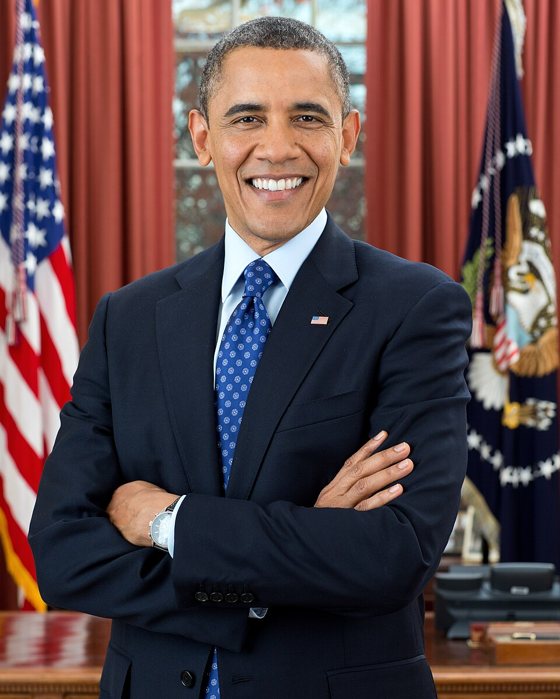
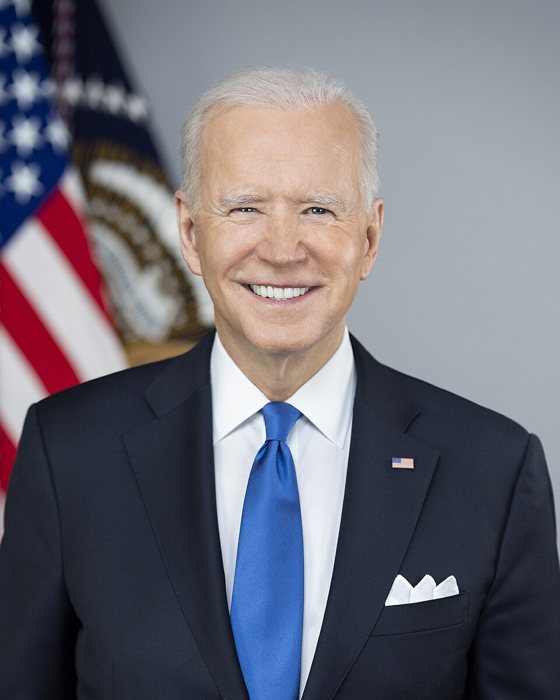
Official portrait of Barack Obama
official portrait · Pete Souza, The White House, 2012 · public domain · source

// 44th president · Democrat · 2009–2017

Barack ObamaThe 44th president

A first-term senator from Illinois who became the first Black president of the United States. He took office in the depths of the Great Recession, passed the Affordable Care Act, and ordered the raid that killed Osama bin Laden, while facing a Republican Congress for most of his presidency.

who
Barack Hussein Obama II, born Aug 4, 1961, in Honolulu, Hawaii.
party
Democratic
in office
Jan 20, 2009 – Jan 20, 2017 (two terms)
vice president
Joe Biden
before
Community organizer in Chicago; civil rights lawyer and law lecturer; Illinois state senator (1997–2004); U.S. senator from Illinois (2005–08)
elections
Won 2008 (365 electoral votes) and 2012 (332)
known for
Recession recovery act, Affordable Care Act, Dodd-Frank, bin Laden raid, Iran nuclear deal, Paris climate agreement, same-sex marriage era
after office
Obama Foundation and Presidential Center in Chicago; memoirs; campaigning for Democrats
five presidencies, 1993 to the end of the current term (Jan 2029)
1993199720012005200920132017202120252029

blue = Democrat · red = Republican · Trump's two terms are split by Biden's term

electoral votes (538 total, 270 to win; line marks 270)
2008

Obama 365 · McCain 173 · about 52.9% of the popular vote

2012

Obama 332 · Romney 206 · about 51.1% of the popular vote

timeline
  1. 1961Born in Honolulu
  2. 1983Graduates from Columbia; later organizes in Chicago
  3. 1990First Black president of the Harvard Law Review
  4. 1996Elected to the Illinois Senate
  5. 2004Democratic convention keynote; elected to the U.S. Senate
  6. 2008Defeats Hillary Clinton in the primaries and John McCain in the general election
  7. 2009Recovery act; auto rescue; Nobel Peace Prize
  8. 2010Affordable Care Act; Dodd-Frank; Republicans win the House
  9. 2011Bin Laden killed; debt-ceiling standoff; last U.S. troops leave Iraq
  10. 2012DACA; re-elected over Mitt Romney
  11. 2013HealthCare.gov stumbles; Snowden NSA disclosures
  12. 2014Campaign against ISIS begins; Republicans win the Senate
  13. 2015Iran nuclear deal; Paris climate agreement; Obergefell decision
  14. 2016Merrick Garland nomination blocked; Russian election interference
§ 1

Early life and the road to the White House

Obama was born in Hawaii to a Kenyan father and an American mother from Kansas, and spent part of his childhood in Indonesia before being raised largely by his grandparents in Honolulu.

After Columbia University he worked as a community organizer on Chicago's South Side, then graduated from Harvard Law School, taught constitutional law at the University of Chicago, and won a seat in the Illinois Senate in 1996.

more details

At Harvard he was elected the first Black president of the Harvard Law Review, which led to his memoir Dreams from My Father (1995).

He lost a 2000 primary challenge to Rep. Bobby Rush. In 2002 he gave a speech opposing the coming Iraq war, a position that later set him apart from rivals who voted for it.

His keynote address at the 2004 Democratic National Convention made him a national figure. That fall he won an open U.S. Senate seat in Illinois, and in February 2007 he announced his presidential campaign in Springfield.

sources [1] [2]

§ 2

Elections: 2008 and 2012

In 2008 Obama beat Hillary Clinton in a long primary fight, then defeated Republican John McCain with 365 electoral votes, winning states such as Indiana and North Carolina that Democrats had not carried in decades.

In 2012 he defeated Mitt Romney with 332 electoral votes.

more details

The 2008 campaign was built on a large volunteer organization and online small-dollar fundraising. The collapse of Lehman Brothers in September 2008 shifted the race toward the economy.

Obama's former pastor, Rev. Jeremiah Wright, became a campaign controversy over past sermons; Obama responded with a speech on race in Philadelphia ("A More Perfect Union").

In 2012 his campaign focused on the auto industry rescue and portrayed Romney, a former private equity executive, as out of touch, a message helped by a leaked video of Romney's "47 percent" remarks. Romney focused on slow economic growth and the health care law.

sources [3] [4]

§ 3

The Great Recession and recovery

Obama took office as the economy was shedding hundreds of thousands of jobs a month. In February 2009 he signed the American Recovery and Reinvestment Act, a stimulus package of tax cuts, aid to states and infrastructure spending that the Congressional Budget Office estimated at about $787 billion when passed.

His administration also rescued General Motors and Chrysler through managed bankruptcies, and ran stress tests on the largest banks.

more details

Unemployment peaked at 10.0% in October 2009 and fell to 4.7% by January 2017, according to the Bureau of Labor Statistics. Monthly job growth turned positive in 2010 and stayed positive for the rest of his presidency.

Economists continue to debate the stimulus. CBO estimated it raised output and employment significantly in 2009–2011; critics argued it was poorly targeted or that the recovery was the slowest since World War II. Some liberal economists argued it was too small.

Federal deficits peaked near $1.4 trillion in fiscal 2009 and then fell by more than half by 2015, partly because of the recovery and partly because of spending caps in the 2011 Budget Control Act, which followed a standoff over raising the debt ceiling. Standard & Poor's downgraded the U.S. credit rating that August.

sources [5] [6] [7] [8]

§ 4

The Affordable Care Act

The Patient Protection and Affordable Care Act, signed in March 2010, expanded Medicaid, created subsidized insurance marketplaces, barred insurers from denying coverage for pre-existing conditions, and let young adults stay on a parent's plan until 26.

It passed without a single Republican vote and remained the central political fight of his presidency. The uninsured rate fell to historic lows after it took full effect in 2014.

more details

The law required most people to have insurance or pay a penalty (the "individual mandate"). In NFIB v. Sebelius (2012) the Supreme Court upheld the mandate as a tax but made the Medicaid expansion optional for states; many Republican-led states declined it for years.

The launch of HealthCare.gov in October 2013 was a technical failure that took months to fix. Some people whose individual plans were cancelled pointed to Obama's repeated promise that "if you like your plan, you can keep it," which fact-checkers rated false.

Republicans in the House voted dozens of times to repeal the law. A 2017 repeal effort failed in the Senate, and the Supreme Court rejected further challenges in King v. Burwell (2015) and California v. Texas (2021). Congress set the mandate penalty to zero starting in 2019.

sources [9] [10] [11] [12]

§ 5

Other major laws and actions

Obama signed the Dodd-Frank Wall Street Reform and Consumer Protection Act (2010), which tightened bank rules and created the Consumer Financial Protection Bureau. He also signed the Lilly Ledbetter Fair Pay Act and the repeal of "Don't Ask, Don't Tell."

After 2010, with Republicans controlling the House, he relied more on executive action, including the Deferred Action for Childhood Arrivals (DACA) program and climate rules for power plants.

more details

The Lilly Ledbetter Act (January 2009) gave workers more time to sue over pay discrimination. The 2010 repeal of Don't Ask, Don't Tell allowed gay, lesbian and bisexual people to serve openly in the military. He announced his support for same-sex marriage in 2012; the Supreme Court legalized it nationwide in Obergefell v. Hodges (2015).

DACA (2012) deferred deportation and allowed work permits for many people brought to the U.S. as children. A broader 2014 program for parents (DAPA) was blocked by the courts. His administration also deported large numbers of people, especially in its first term, leading some immigrant advocates to call him "deporter in chief."

The Clean Power Plan (2015) to cut power-plant carbon emissions was put on hold by the Supreme Court in 2016 and never took effect. He also nominated Sonia Sotomayor and Elena Kagan to the Supreme Court; his 2016 nomination of Merrick Garland was never given a Senate hearing.

sources [13] [14] [15] [16] [17]

§ 6

Foreign policy and national security

Obama ended the U.S. combat mission in Iraq (the last troops left in December 2011), sent more troops to Afghanistan in 2009, and authorized the May 2011 raid in Pakistan that killed Osama bin Laden.

He negotiated the 2015 Iran nuclear agreement, restored diplomatic relations with Cuba, and joined the Paris climate agreement.

more details

He won the Nobel Peace Prize in 2009, less than a year into his term, which he said he accepted with humility. He expanded drone strikes against militants in Pakistan, Yemen and Somalia, which drew criticism over civilian deaths and secrecy.

In 2011 the U.S. joined a NATO-led air campaign in Libya that helped topple Muammar Qaddafi; Libya then fell into conflict. In 2012 militants attacked U.S. facilities in Benghazi, killing Ambassador Christopher Stevens and three other Americans.

In Syria, he declared the use of chemical weapons a "red line" in 2012, but after a 2013 sarin attack chose a Russian-brokered deal to remove declared chemical weapons rather than airstrikes. After the Islamic State seized territory in Iraq and Syria in 2014, he began an air campaign against it. Russia annexed Crimea in 2014; the U.S. and Europe responded with sanctions.

The Joint Comprehensive Plan of Action (2015) limited Iran's nuclear program in exchange for sanctions relief. It was not submitted as a treaty, and President Trump withdrew from it in 2018.

sources [1] [18] [19] [21]

§ 7

Race, policing and political division

As the first Black president, Obama spoke about race at moments such as the 2012 killing of Trayvon Martin and the 2015 Charleston church shooting, where he sang "Amazing Grace" at the eulogy for Rev. Clementa Pinckney.

Polarization deepened during his tenure. The Tea Party movement rose against the stimulus and health law, and Republicans won the House in 2010 and the Senate in 2014.

more details

Protests after police killings in Ferguson, Missouri, and elsewhere led his Justice Department to investigate local police departments and created a task force on 21st Century Policing.

A conspiracy theory that he was not born in the United States, promoted by Donald Trump among others, persisted despite Hawaii officials' confirmation; Obama released his long-form birth certificate in April 2011. Trump acknowledged in 2016 that Obama was born in the U.S.

sources [1]

§ 8

After the presidency and legacy

Since leaving office Obama has run the Obama Foundation, written the memoir A Promised Land (2020), and campaigned for Democrats, including Joe Biden and Kamala Harris.

Historians' surveys have placed him in the upper third of presidents. Much of his record, including the health law, remains contested, while some executive actions were reversed by his successor.

more details

The Obama Presidential Center is being built in Jackson Park on Chicago's South Side. Unlike earlier presidential libraries, it is not run by the National Archives; his records are being digitized instead.

Michelle Obama's memoir Becoming and the couple's production company, Higher Ground, extended their public profile. Obama remains one of the most popular figures in his party.

sources [24] [25]

§ 9

Criticisms, in full

Each criticism below sets out the claim, the evidence, why critics care, and the reply from Obama or his defenders.

"If you like your plan, you can keep it"

the claim Critics say Obama misled the public about the health care law's effect on existing insurance plans.

evidence, why it matters, the reply

evidence

Obama repeatedly promised people could keep their current plans. In late 2013, insurers sent cancellation notices to millions of people in the individual market whose plans did not meet the law's new standards. PolitiFact named the promise its 2013 "Lie of the Year." Obama apologized and allowed a transition period.

why critics care

Critics argue the promise was central to selling the law, and that a president should not make guarantees he knows cannot hold for everyone.

the other side

Defenders note the affected group was a small share of all insured Americans, most of whom kept employer or government coverage, and that many replacement plans offered more protection, often with subsidies. Obama said he regretted the wording.
sources [12] [9]

Drone strikes and civilian deaths

the claim Critics argue Obama greatly expanded secret drone warfare, killing civilians and at least one American without trial.

evidence, why it matters, the reply

evidence

Drone strikes in Pakistan, Yemen and Somalia increased sharply under Obama. In 2016 the administration estimated 64 to 116 civilian deaths in strikes outside active war zones from 2009 to 2015; independent groups such as the Bureau of Investigative Journalism estimated considerably more. A 2011 strike killed Anwar al-Awlaki, a U.S.-born cleric, without trial.

why critics care

Critics argue lethal force should be transparent and accountable, and that killing citizens abroad without trial sets a dangerous precedent for future presidents.

the other side

The administration said strikes were legal under the 2001 war authorization and self-defense, more precise than alternatives, and governed by rules adopted in 2013 requiring "near certainty" of no civilian harm. Obama later published casualty figures and ordered annual reporting.

sources [22]

Benghazi

the claim Critics said the administration failed to protect Americans in Benghazi and misled the public about the attack.

evidence, why it matters, the reply

evidence

Four Americans died in the Sept 11–12, 2012 attacks. An independent Accountability Review Board found "systemic failures" in State Department security. Early administration talking points described a protest over an anti-Islam video, which turned out to be wrong for Benghazi.

why critics care

Critics argued security requests were ignored and that the initial account was shaped by the election campaign.

the other side

Multiple investigations, including the House Select Committee's 2016 report, did not find that a military rescue was possible in time or that officials deliberately lied; intelligence assessments were themselves confused in the first days. Democrats called the long inquiry politically motivated.

sources [19] [20]

Surveillance and leak prosecutions

the claim Critics say Obama continued and expanded mass surveillance and prosecuted leakers more aggressively than any predecessor.

evidence, why it matters, the reply

evidence

Documents leaked by Edward Snowden in 2013 revealed NSA bulk collection of Americans' phone records. The administration brought more prosecutions under the Espionage Act for leaks to the press than all previous administrations combined.

why critics care

Civil liberties groups argue bulk collection violated privacy, and that leak prosecutions chilled reporting on government misconduct.

the other side

The administration said programs were legal, overseen by courts and Congress, and helped stop plots. Obama backed the 2015 USA FREEDOM Act, which ended the government's bulk storage of phone records.

sources [23]

Syria and the "red line"

the claim Critics argue Obama damaged U.S. credibility by not enforcing his "red line" on chemical weapons in Syria.

evidence, why it matters, the reply

evidence

After a 2013 sarin attack near Damascus killed hundreds, Obama sought congressional approval for strikes, then accepted a Russia-brokered deal to remove declared chemical weapons. Syria later used chemical weapons again.

why critics care

Critics say adversaries, including Russia, saw weakness, and that the civil war's death toll grew while the U.S. stood back.

the other side

Obama argued the deal removed far more chemical weapons than strikes could have, and that another Middle East war was not in U.S. interests and lacked public or congressional support.

sources [1]

§ 10

Money: PACs, super PACs, philanthropy

Obama changed presidential fundraising: he was the first major-party nominee to turn down public financing for the general election since the system began in 1976, relying instead on millions of donors.

Campaign committees and PACs

Obama for America raised record sums in 2008, much of it online, and he declined general-election public financing. He also refused donations from federal lobbyists and PACs to his campaign committee.

more details

In 2012 his campaign and the Democratic Party again raised more than a billion dollars combined, according to FEC filings. After the election his campaign apparatus became Organizing for Action, a nonprofit that promoted his agenda and later merged with the National Democratic Redistricting Committee's efforts.

Critics noted that, despite the lobbyist ban, he relied on large "bundlers" and that his inauguration and later convention accepted corporate support.

sources [26] [27]

Super PACs and outside groups

Super PACs arrived in 2010, and Obama criticized the Citizens United ruling in his 2010 State of the Union. In 2012 he nonetheless endorsed fundraising for Priorities USA Action, the main super PAC supporting him.

more details

His campaign said it could not "unilaterally disarm" against Republican super PACs such as Restore Our Future, which backed Romney. Priorities USA later became the leading Democratic super PAC in 2016 and 2020.

sources [28] [29]

Philanthropy and foundations

The Obama Foundation, based in Chicago, is building the Obama Presidential Center and runs leadership programs for young people in the U.S. and abroad. My Brother's Keeper Alliance, started as a White House initiative, focuses on boys and young men of color.

more details

The foundation publishes donors who give above a set amount on its website. Its decision to build in a public park drew a lawsuit from a preservation group; courts allowed construction to proceed.

The Obamas also donated proceeds from his Nobel Prize to charities.

sources [24]

See also the tracker's PACs and Philanthropy pages (New York first).

§ 11

Sources

Every section above is an original summary written for Astor Academy from the public sources below. Numbers come from official records (National Archives, FEC, BLS, CBO, court opinions, Congress) wherever possible. Last reviewed Nov 9, 2026.

  1. [1] Barack Obama: presidential essays · Miller Center, University of Virginia
  2. [2] Barack Obama biography · White House Historical Association
  3. [3] 2008 Electoral College results · National Archives
  4. [4] 2012 Electoral College results · National Archives
  5. [5] H.R.1 (111th): American Recovery and Reinvestment Act of 2009 · Congress.gov
  6. [6] Estimated impact of the American Recovery and Reinvestment Act · Congressional Budget Office
  7. [7] Unemployment rate (series LNS14000000) · U.S. Bureau of Labor Statistics
  8. [8] Historical Tables (Table 1.1: surpluses or deficits) · White House Office of Management and Budget
  9. [9] H.R.3590 (111th): Patient Protection and Affordable Care Act · Congress.gov
  10. [10] National Federation of Independent Business v. Sebelius, 567 U.S. 519 (2012) · U.S. Supreme Court (via Cornell LII)
  11. [11] Health insurance coverage in the United States (annual reports) · U.S. Census Bureau
  12. [12] Lie of the Year: "If you like your health care plan, you can keep it" · PolitiFact
  13. [13] H.R.4173 (111th): Dodd-Frank Wall Street Reform and Consumer Protection Act · Congress.gov
  14. [14] S.181 (111th): Lilly Ledbetter Fair Pay Act of 2009 · Congress.gov
  15. [15] H.R.2965 (111th): Don't Ask, Don't Tell Repeal Act of 2010 · Congress.gov
  16. [16] Obergefell v. Hodges, 576 U.S. 644 (2015) · U.S. Supreme Court (via Cornell LII)
  17. [17] Consideration of Deferred Action for Childhood Arrivals (DACA) · U.S. Citizenship and Immigration Services
  18. [18] Joint Comprehensive Plan of Action · U.S. Department of State (archived)
  19. [19] Final Report of the Select Committee on the Events Surrounding the 2012 Terrorist Attack in Benghazi (H. Rept. 114-848) · Congress.gov
  20. [20] Accountability Review Board report on Benghazi (2012) · U.S. Department of State (archived)
  21. [21] The Nobel Peace Prize 2009: Barack Obama · NobelPrize.org
  22. [22] Summary of information regarding U.S. counterterrorism strikes outside areas of active hostilities (2016) · Office of the Director of National Intelligence
  23. [23] H.R.2048 (114th): USA FREEDOM Act of 2015 · Congress.gov
  24. [24] The Obama Foundation and Obama Presidential Center · Obama Foundation
  25. [25] Presidential Historians Survey 2021 · C-SPAN
  26. [26] Candidate filings: Barack Obama (P80003338) · Federal Election Commission
  27. [27] Public funding of presidential elections · Federal Election Commission
  28. [28] Making independent expenditures (super PACs) · Federal Election Commission
  29. [29] Citizens United v. FEC, 558 U.S. 310 (2010) · U.S. Supreme Court (via Cornell LII)

other presidents